WEAVE - WEEK 2 Material Intelligence
Material Process People Utility


Week 2 2026
WEAVE
Material Intelligence
W— Work
We often assume craft knowledge lives in the maker. Often, it lives in the material.
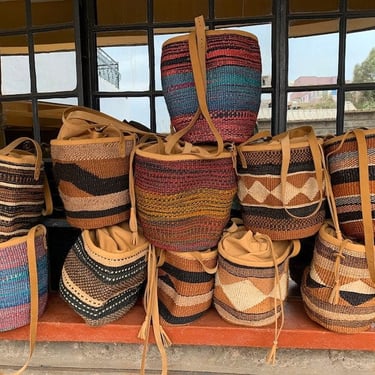
Sisal is a hardy fibre, used for rope, carpet, and other applications where failure is not tolerated. After extraction, it is dry and stiff. It must be split, softened, and sometimes soaked before it can bend without breaking. The material refuses certain decisions.
This is why weaving takes time. The pace is not cultural preference; it is physics.
Rushing creates structural weakness, not just aesthetic imperfection.
Skill emerges as the body learns the rule. Sitting with the makers, I watch a strand of sisal rolled briefly against the thigh. It tightens into a coil, then another, then another, repeated until a loose heap of fibres becomes workable material. The movement is quick, almost absent-minded, but precise. Years of repetition have placed the correct tension into the hands.
No written manual teaches this. Knowledge accumulates through contact. The fibre itself prevents error. It bends only within certain limits and fails when pushed beyond them, a form of material correction that precedes judgement.
Working with constraint shapes planning. Production is affected by weather, moisture, drying time, and interruptions. Patience here is not a virtue; it is an operational necessity. The basket is therefore not only an object, but a system organised around material behaviour.
Modern production often removes these limits: synthetics, automation, and rapid iteration. When resistance disappears, feedback is delayed. Decisions can be made faster, but judgment weakens because the material no longer corrects the maker.
Respect for limits produces reliability. Ignoring limits produces scale, but often instability.
A good basket holds because the maker obeyed the fibre, not because they expressed creativity.
material → body → planning → systems → modern contrast.
E — Eye
Two baskets, seen differently.
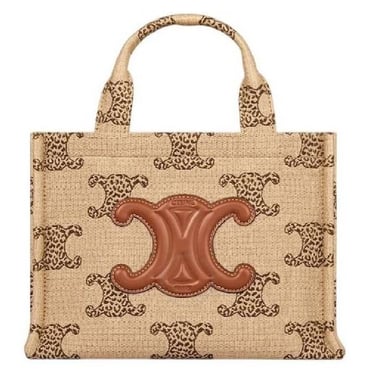
1) The shop window
In the window the basket holds nothing.
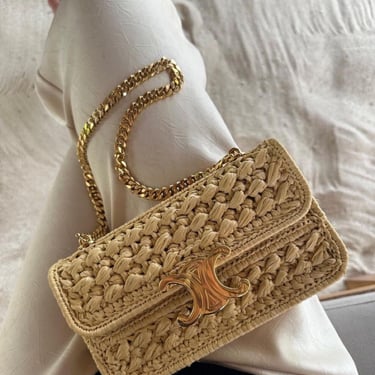
It is lifted onto a plinth, lit from above, its shadow sharper than its weave. The leather trim does most of the talking — edges clarified, handles taught to stand upright.
You understand it immediately as an object to be chosen, not used.
Its emptiness is deliberate; capacity would distract from outline.
The basket has become a shape first and a container second.
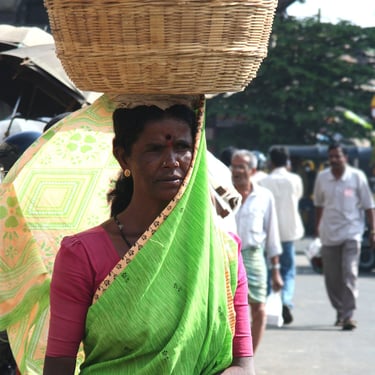
2) The market
Elsewhere the basket is never introduced empty.
It leans, collapses slightly under weight, remembers the last thing it carried. The handles soften into the hand rather than presenting themselves to it.
You notice the rim more than the body — where the grip has polished it darker than the fibre began.
Here the shape is a consequence of use.
Same object. One waits to be filled, the other already has been.
A — Archive
Book: GRIT — The Power of Passion and Perseverance
I know I'm late to the game when it comes to this book, but better late than never. I feel that there will be gems here for me and for all those around me
V — Voice
Working across changing tools and platforms has required a different kind of discipline. I tend to value mastery—knowing a process well enough to guide it effectively. But building something means accepting that not every part can be held personally.
I rely now on tools and collaborators: designers found online, shared templates, and systems that extend capacity. They are useful but also require attention. The real adjustment is not technical; it is learning where control is necessary and where coordination is enough.
One person cannot do everything without weakening the work. The task becomes choosing what must remain close and what can be responsibly delegated to others.
E — Echo
What happens to judgement when materials stop resisting us?
Until next Time,
Linda Odhiambo Hooper
@PlentyPowerHQ