
WEAVE - WEEK 09 CONSISTENCY VS COORDINATION
This essay is part of WEAVE, a weekly series on material systems, labour, and design. Read more at PAM YO studio.
4/17/20264 min read

WEAVE
This essay is part of WEAVE, a weekly series on material systems, labour, and design. Read more at PAM YO studio.
WEEK 09 Consistency vs Coordination
W — WORK
Working position:
Most distributed systems don’t fail because people are unskilled.
They fail because they rely on coordination instead of consistency.
Coordination is effortful.
Consistency is structural.
If PAM YO! is going to scale, this is the essay that quietly defines how we will.
Consistency vs Coordination
The samples arrive from Ana’s group.
They are good. More than good. Enough to move forward.
And then, a measurement is asked again. Then follows a real moment where something should have been obvious but wasn’t. However, this type of design poses distinctly different challenges.
It's not dramatic, particularly. It is just slightly off.
A measurement was asked twice.
A finish interpreted differently by two people.
A bag that arrives almost right.
That “almost” is the whole piece.
The first batches rarely reveal their fragility; instead, they possess nothing obviously wrong. More messages are exchanged, and more clarifications are made. Photographs passed back and forth, each one an attempt to steady what cannot yet hold itself. There is a question about size, another about colour, and a small correction to the handle. Nothing breaks. Nothing fails outright. And yet, nothing quite settles.
Notice that each decision requires attention. Each adjustment depends on someone remembering what was said before, what was agreed, what was implied, and what was almost but not quite resolved. The work advances, but not on its own terms. It is carried forward, piece by piece, through coordination.
At this scale, coordination can look like care. It feels attentive, even generous. There is responsiveness in it, a certain human presence. But beneath that surface is a quieter truth: the system does not yet hold the work. The people do.
And people, unlike systems, tire.
Coordination is expensive in ways that do not immediately register. Not in money, at first, but in attention, the most finite resource in any emerging structure. It requires follow-up, repetition, and re-explanation. A measurement that should have been fixed becomes a conversation. A material that should have been standard becomes a question. A finish that should have been assumed becomes something to negotiate.
Nothing is technically wrong. But nothing is stable.
Consistency is easy to miss. It is not discussed. It does not need to be. A size is not debated; it is known. A stitch is not interpreted; it is repeated. A handle is not reconsidered; it has already been resolved. The work moves forward without needing to be re-held each time it is made.
This is where many design-led systems hesitate. Consistency is often mistaken for rigidity, for a kind of flattening that strips away the nuance of craft. It is seen as limiting, even reductive, as though repetition diminishes the human element rather than supporting it.
But the opposite is true.
Consistency is what allows variation to exist without collapse. It establishes a centre, a set of conditions that hold within which difference can move freely. Without it, variation accumulates without structure. What emerges is not richness, but drift, and perhaps art.
In distributed production systems, drift is rarely dramatic. It does not broadcast itself as a failure. It appears instead as a difference. A handle slightly thicker. A base that gives more than it should. A weave that loosens just enough to change the feel of the object in the hand. Each variation is defensible on its own terms. Each can be explained. But taken together, across a batch, something begins to slip.
The product loses its centre.
Some things cannot move.
Size. Structure. Function.
Everything else can.
The function holds. Within that framework, variation can move without destabilising the whole.
This is not standardisation in the industrial sense. It is not about sameness for its own sake. It is a form of alignment, a quiet agreement embedded in the object itself, rather than negotiated each time anew.
In many informal systems, coordination persists because it is familiar. Work moves through conversation, through relationship, through real-time adjustment. These are not weaknesses. They are, in many contexts, strengths which are flexible, adaptive, and responsive to the conditions at hand.
But when such systems are translated into a product without an accompanying structure, those same strengths become points of strain. The burden shifts almost imperceptibly: from the system to the individual, from design to memory, from clarity to effort.
And effort does not scale.
Design, in this context, is often misunderstood. It is not what makes the object appear resolved. It is what allows the object to be made the same way more than once, without explanation, without supervision, without correction.
The question, then, is not whether coordination should exist. It always will. The question is what it is being asked to do.
If coordination is required simply to produce the basic form, the system is not yet designed. If it is used instead to refine, improve, adapt, and respond to what emerges, then the system is working as it should.
Consistency, seen this way, is not a form of control. It is a form of release. It removes the need to ask, to check, to hold the process together manually. It allows the work to travel further than any one person can carry it.
The shift, when it comes, is discreet.
The question, Did you remember?, disappears.
In its place: It is always done this way.
That is when a system begins to hold.
E — EYE
Observation idea:
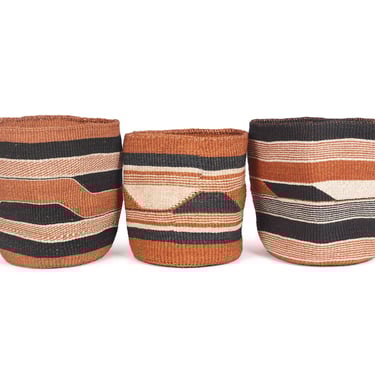
A stack of baskets that are almost the same, but not quite. They sit next to each other, appearing identical at a distance.
Same material. Same colour. Same intention.
But when handled, the differences emerge.
One leans slightly. Another holds its shape. One feels tight. Another gives.
None of them is wrong.
But together, they do not resolve into a single object.
Not failure.
Drift
“Difference without structure becomes noise.”
A — ARCHIVE
School Uniforms
School uniforms are often criticised for enforcing sameness.
But their function is not aesthetic.
It is structural.
They remove one layer of daily decision-making.
They create a baseline from which variation, personality, behaviour, and identity can emerge.
What appears restrictive is, in practice, a form of release.
V — VOICE
If a product requires explanation to be made correctly, it is not yet designed.
The goal is not perfection. It is repeatability without supervision.
Until this is achieved, every unit will rely on individual attention.
And attention does not scale.
E — ECHO
What in your system still depends on being remembered?